

Last updated: December 12, 2025
How Africa’s Wealth and Global Trade Are Creating a New Era of Business Innovation Across the Continent
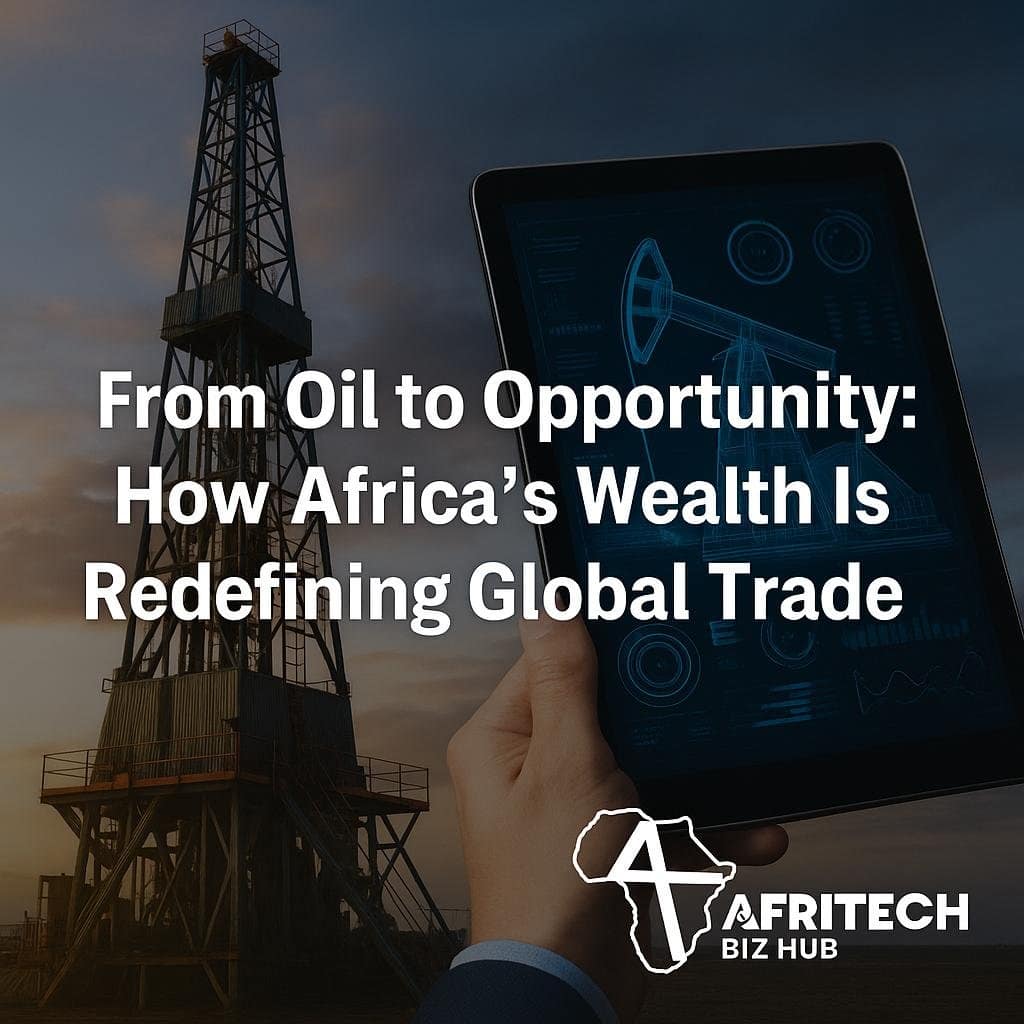
Africa is rich, not in promises, but in potential that’s becoming visible. The continent holds about 30% of the world’s mineral reserves, 8% of its natural gas, and 12% of its oil reserves, according to the Mo Ibrahim Foundation. Yet, it contributes less than 5% to global manufacturing and value-added exports. That statistic reveals both the opportunity and the challenge: Africa’s resources are abundant, but the systems that convert them into scalable industries are still catching up. So the real question isn’t “What does Africa have?” — it’s “What can Africa build?”
Featured Summary:
Africa’s story is shifting from raw exports to real enterprise. Across the continent, entrepreneurs are turning natural wealth, oil, gold, and agriculture, into thriving businesses. With fintech, digital trade, and new financing models bridging access, Africa’s wealth is no longer trapped in the ground. This is the new era of Africa’s wealth and global trade, where innovation powers opportunity, and local ideas create global impact.
The Shift from Extraction to Enterprise
For decades, natural resources defined Africa’s place in the global economy. Crude oil from Nigeria, gold from Ghana, platinum from South Africa, and cocoa from Côte d’Ivoire, shipped out raw, processed elsewhere, and sold back at higher prices. But a quiet revolution is emerging, one driven not by multinationals, but by entrepreneurs who see resources differently. Instead of exporting them, they’re building businesses around them.
Nigeria’s Refining Breakthrough: A Symbol of Private-Sector Resolve
Nowhere is this clearer than in Nigeria, Africa’s top oil producer. For years, the irony was painful: a nation rich in crude oil but dependent on imported fuel. That irony began to fade with one of the most ambitious industrial projects in African history, the Dangote Petroleum Refinery. Valued at over $20 billion, the refinery can process 650,000 barrels per day, making it the largest single-train refinery in the world and the biggest investment in Africa’s modern industrial age. In late 2025, the Nigerian government introduced a 15 percent import duty on refined petroleum products to protect local refiners, a policy shift signalling that the country is finally backing domestic value creation over import dependence. What makes this story significant isn’t just the size of the investment, it’s the shift in mindset. It took a private refinery, not state infrastructure, to prove that industrial transformation in Africa is possible when vision meets execution.
Beyond Oil: Gold, Agriculture, and the Rise of Value Chains
Across the continent, similar stories are unfolding. In Ghana, new gold-refining companies are keeping more value within the country instead of shipping unprocessed ore abroad. In Kenya and Rwanda, agritech startups are using digital platforms to connect farmers to export markets, cutting out middlemen and stabilizing prices. In South Africa, technology is modernizing platinum and lithium extraction to meet the demand for clean-energy minerals. These industries — oil, gold, agriculture — once defined Africa’s past. Now, with the right technology and finance, they’re defining its future.
How Fintech and Digital Finance Are Changing the Game
In our previous Afritech Biz Hub features — Africa’s Tech Leap to The Digital Banking Revolution — we explored how fintech reshaped the flow of money across the continent. That same infrastructure is now fuelling a new kind of business growth.
Digital finance tools are helping resource-based startups access capital.
Supply-chain technologies make trade transparent and traceable.
Blockchain systems verify gold purity and origin, protecting both buyers and miners.
This convergence of finance + technology + resources is where Africa’s next wealth revolution is being written — one that’s inclusive, tech-driven, and globally competitive.
Risks and Realities
Still, every opportunity comes with caution. Resource-based ventures in Africa face high startup costs, volatile commodity prices, and shifting policies. The same government that offers support today might impose an export ban tomorrow. Infrastructure gaps, from ports to power, can limit scalability. Yet, those who understand these realities aren’t discouraged; they adapt. They build smart partnerships, leverage digital systems, and use data to stay ahead of policy swings.
The Bigger Picture: Redefining Global Trade
What’s unfolding isn’t just local reform — it’s a re-entry into the global economy on new terms. Africa isn’t waiting to be a supplier; it’s becoming a player. The new generation of African entrepreneurs and investors is building industries that add value before export — refining, processing, packaging, and branding African-made products for international markets.
It’s no longer about exporting crude oil and importing fuel.
It’s about refining it here.
It’s no longer about mining gold.
It’s about processing and exporting value-added products.
This is how Africa’s wealth is redefining global trade — not as a supplier, but as a producer.
The Road Ahead: Stories That Matter
Over the coming weeks, Afritech Biz Hub will spotlight the pioneers of this transformation — from energy companies and mining innovators to agribusiness startups using data to boost exports.
From crude oil to cocoa, gold mines to green farms, the story of Africa’s wealth is shifting from extraction to empowerment.
And this time, it’s Africans writing the playbook.


Recent Comments