

Featured Summary:
- Clean cooking access is expanding 30% faster, yet nearly one billion Africans remain without it
- More than one-third of Paris’s $2.2 billion pledges has been deployed across 28 African countries
- Population growth, household costs and limited fuel distribution threaten further progress
- Nairobi’s $900 million in new commitments faces a test of affordable, sustained household access
The pace of clean cooking access expansion in Africa is 30% higher than the average over the past five years, the International Energy Agency (IEA) reported on November 12, 2026.
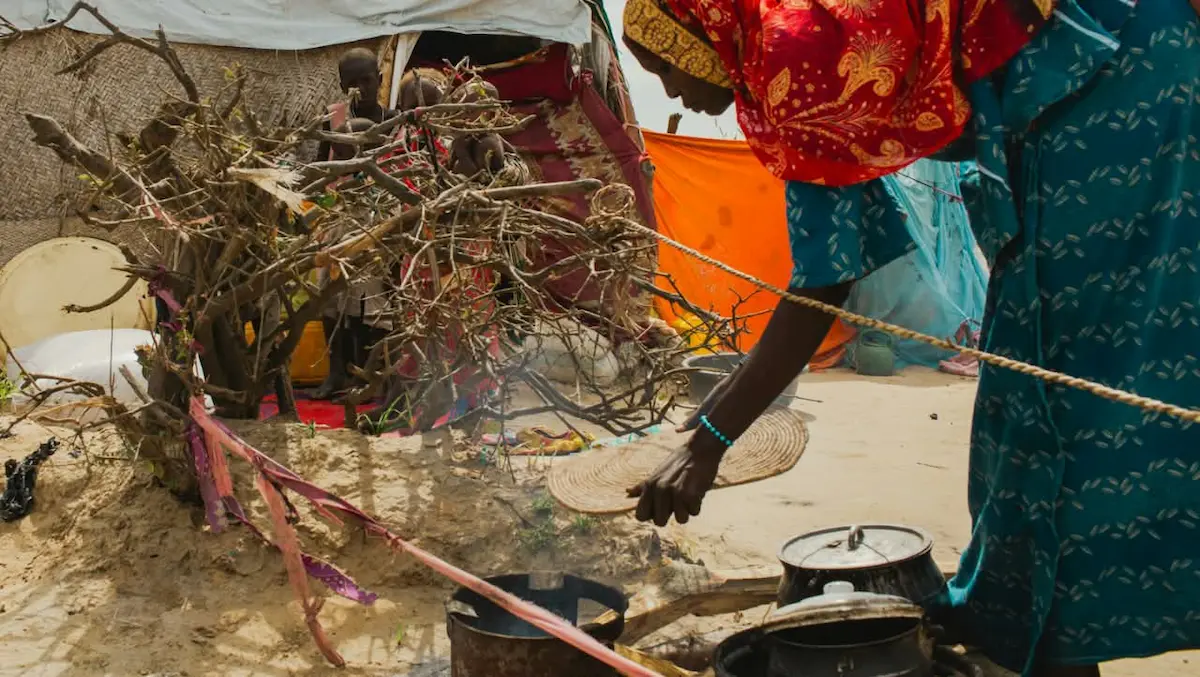
Nearly one billion Africans still lack access, however, and reliance on polluting cooking fuels and technologies contributes to approximately 850,000 premature deaths annually across the continent.
Since the IEA’s first Summit on Clean Cooking in Africa, held in Paris in May 2024, more than one-third of the $2.2 billion pledged has been deployed in projects across 28 countries.
African governments have also introduced more than 120 clean cooking policies. The agency reported faster adoption but did not quantify how much of that improvement resulted directly from the Paris commitments.
The scale of the remaining population without access leaves the effectiveness of these efforts under examination. Financing has reached projects and more people are adopting cleaner cooking technologies, but the latest announcement does not establish whether those gains have reduced the absolute number of Africans without access.
That distinction matters as governments prepare further commitments and seek to expand adoption among households still dependent on polluting fuels.
Paris Clean Cooking Commitments Face Delivery Scrutiny
The International Energy Agency (IEA) reported that $470 million of the financing pledged at its May 2024 Paris summit had been disbursed by June 2025.
By July 2026, the amount had reached $740 million, supporting projects in 22 African countries. The agency’s November update confirmed that more than one-third of the original commitments had been deployed across 28 countries, although it did not disclose a revised dollar total.
The African Development Bank Group has increased its clean cooking financing roughly tenfold since the Paris summit, according to its president, Sidi Ould Tah, in July 2026.
The announcement did not specify the original financing amount or the number of households reached. The IEA’s commitment tracking covers funding released against summit pledges, but its published aggregate updates do not establish how many people gained access through those projects.
Policy implementation has progressed in several countries. Eight of the 12 African governments that made commitments at Paris had introduced new clean cooking measures by the IEA’s 2025 assessment.
Tanzania and Kenya recorded the largest improvements in policy coverage among those participants. By July 2026, the agency had identified 121 new policies across more than 30 countries, home to approximately 80% of Africans without clean cooking access.
The IEA’s 2025 assessment estimated that around 13 million people gained clean cooking access annually in sub-Saharan Africa over the preceding five years, including approximately 12 million through liquefied petroleum gas.
Its November 2026 announcement reported a 30% acceleration in the pace of access expansion across Africa, but did not provide a comparable annual figure or isolate the contribution of Paris-funded programmes. The available figures therefore do not establish how many additional people gained access because of the summit.
Africa’s Population Growth Threatens Clean Cooking Progress
The number of people without clean cooking access in sub-Saharan Africa has been increasing by approximately 14 million annually, according to the 2025 Tracking SDG 7 report published by five international agencies, including the International Energy Agency (IEA) and World Bank.
Population growth has exceeded the number of people gaining access, even as clean cooking programmes have expanded across the region.
Nigeria and Ethiopia account for substantial portions of the remaining deficit. World Bank estimates put Nigeria’s clean cooking access rate at approximately 28% in 2024, compared with around 7% in Ethiopia.
The IEA’s 2026 review estimated that roughly 120 million Ethiopians relied on traditional cooking methods in 2024. Both countries face the challenge of extending access to growing populations, although their national energy systems and existing coverage differ considerably.
The rural deficit is particularly severe. The 2025 Tracking SDG 7 report found that 42% of urban residents in sub-Saharan Africa had access to clean cooking in 2023, compared with 7% of rural residents.
More than nine in ten rural residents therefore lacked access, placing a substantial share of the region’s remaining demand outside established urban fuel and electricity markets.
Under the IEA’s Accelerating Clean Cooking and Electricity Services Scenario, approximately 80 million people would need to gain access annually for sub-Saharan Africa to achieve universal clean cooking coverage by 2040.
The scenario requires annual improvements of 4.7 percentage points in access rates. Against the region’s historical increase in the population without access, the target illustrates how much faster adoption must expand before the deficit can be eliminated.
High Cooking Costs Keep African Households Using Polluting Fuels
Nearly 600 million people in sub-Saharan Africa would need to spend more than 10% of their household income to obtain clean cooking access, according to the International Energy Agency’s (IEA) 2025 assessment.
Its affordability calculation combines the upfront cost of cooking equipment with one year of fuel, measured against disposable household income. The estimates use modelled local income levels and the least-cost cooking options available in different locations.
LPG prices have placed additional pressure on households already using cleaner fuels. Import prices in East Africa rose to 90% above their 2025 average during March 2026, while West African prices climbed to 70% above that benchmark.
The IEA estimated in May that 45% of LPG users in sub-Saharan Africa were spending at least one additional percentage point of their income on cooking fuel. For one in eight households, the increase amounted to at least 10% of income, putting continued LPG use at risk.
Half of sub-Saharan Africa’s LPG demand is supplied through imports. The IEA identified insufficient storage, bottling facilities and specialised transport as constraints on expanding distribution.
Electricity presents a different problem: approximately 80% of households cooking with LPG have an electricity connection, but only about one-third receive reliable power. Switching to electric cooking therefore remains difficult for many existing LPG users.
Tanzania removed value-added tax on imported LPG cylinders and bulk storage facilities, while other governments have used fuel subsidies and price controls to limit household expenses.
The IEA estimated that removing VAT on clean cookstoves across sub-Saharan Africa could enable approximately 13 million additional people to adopt cleaner cooking technologies. This is a projected affordability improvement, not a recorded increase in household adoption.
The agency also identified stove design, cooking practices and fuel availability as factors affecting continued use. Its published estimates quantify the pressure from higher prices but do not establish how many households have subsequently returned to charcoal or firewood.
Without that evidence, stove purchases and new connections cannot be treated as proof that households have permanently stopped using polluting fuels.
Nairobi Summit Faces Test of Africa’s Clean Cooking Commitments
The International Energy Agency (IEA) will hold its second Summit on Clean Cooking in Africa in Nairobi on January 27–28, 2027, alongside Kenya, Norway and the United States.
An additional $900 million in financial commitments has been announced ahead of the meeting, with the African Union and African Development Bank Group involved in preparations. Further pledges are expected.
The African Union and IEA are working with governments on national clean cooking policies ahead of Nairobi. Their preparations identify an annual investment requirement of approximately $2 billion, against $770 million invested in 2024.
Participating countries are being encouraged to introduce one to three policy measures by the end of 2027. The measures and their implementation schedules have yet to be confirmed by individual governments.
The IEA has introduced a Clean Cooking Security Programme addressing fuel supply disruptions. Its published summit announcements have not specified how much of the new financing will support household equipment, recurring fuel costs or distribution in rural communities. Project recipients, disbursement schedules and expected household coverage also remain to be established.
Paris produced substantial financing commitments and new national policies, but the IEA’s reported 30% acceleration has not established how much the absolute access deficit has declined.
Nairobi will bring another round of funding and policy decisions. Its success will be measured by whether those commitments translate into sustained adoption and a reduction in the number of Africans still cooking with polluting fuels.


Recent Comments