

Featured Summary:
- Africa invested $675 million in clean cooking in 2023, including $590 million in LPG
- LPG attracted 80% of historical clean cooking investment, but its post-Paris share remains unclear
- Paris clean cooking financing reached $740 million in disbursements by July 2026
- Nairobi’s $900 million in new commitments could support further LPG infrastructure and distribution investments
Liquefied petroleum gas (LPG) accounted for approximately 80% of clean cooking investment in sub-Saharan Africa over the five years preceding the International Energy Agency’s (IEA) 2025 assessment.
Direct investment reached $675 million in 2023, including approximately $590 million for LPG. Spending covered cylinders, cooking equipment, fuel storage and refilling infrastructure.
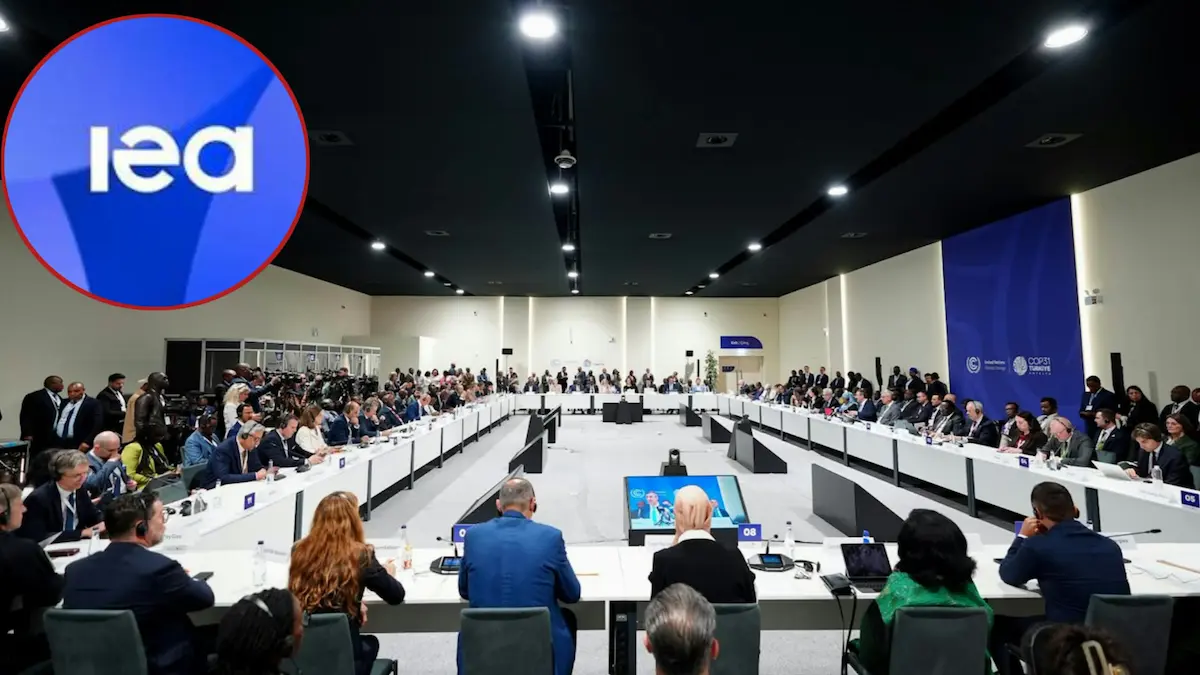
The IEA’s first Summit on Clean Cooking in Africa, held in Paris in May 2024, secured more than $2.2 billion in financial commitments from governments, private companies and development institutions. Approximately $740 million had been deployed by July 2026 across clean cooking technologies and financing arrangements.
The agency reported in November 2026 that clean cooking access in Africa was expanding 30% faster than the preceding five-year average. Another $900 million in commitments had been announced in July ahead of the second summit, scheduled for January 27–28, 2027, in Nairobi.
The financing records do not establish how much post-Paris capital reached LPG companies or infrastructure projects. Further investment will depend on the businesses that have converted financing into operating facilities, increased fuel sales and demonstrated sustainable revenues.
Paris Clean Cooking Pledges Face Investment Delivery Test
Vitol and Vivo Energy pledged $550 million at the May 2024 Paris summit to expand clean cooking access in Africa, the largest disclosed private-sector commitment.
TotalEnergies committed $355 million for its African operations, while BURN pledged $275 million. Shell announced an $85 million commitment, and Africa50 allocated $150 million from its balance sheet to support investment in the sector.
By June 2025, the International Energy Agency (IEA) had recorded $470 million in disbursements against the summit commitments. Private-sector contributors accounted for approximately $387 million, compared with $83 million from public institutions.
The agency’s corrected commitment tracking recorded $101 million in progress against Vitol and Vivo Energy’s pledge, $82 million against TotalEnergies’ commitment and $18 million against BURN’s. Oryx Energies reported $5 million against its $50 million pledge.
Shell recorded $85 million in progress against its African commitment, directed towards an energy access investment fund. The fund arrangement differs from direct expenditure on LPG facilities because its capital must subsequently be invested in businesses.
Circle Gas reported $48 million against a $75 million commitment for electric cooking, demonstrating that private-sector disbursements covered technologies beyond LPG.
The IEA’s July 2026 update confirmed further deployment of Paris financing, although the published aggregate did not provide a comparable company-level breakdown.
Its earlier records identify substantial private-sector participation but do not establish how much financing was spent on LPG storage terminals, cylinder manufacturing or distribution facilities.
The financing disclosures establish progress against several major corporate commitments. They do not provide a consolidated account of LPG-specific capital expenditure or the operating performance of businesses receiving investment.
LPG Infrastructure Investments Face Commercial Performance Test
Cylinders accounted for approximately 36% of LPG investment in sub-Saharan Africa, according to the International Energy Agency’s (IEA) 2025 assessment.
Cooking equipment received 29%, primary storage 20% and refilling infrastructure 15%. Household equipment therefore absorbed most historical spending, with storage and refilling facilities accounting for the remainder.
Sahara Group commissioned a 6,000-tonne LPG storage terminal at Tema, Ghana, in September 2026 through its Asharami Ghana subsidiary.
The facility is the first phase of a planned 12,000-tonne development and increased national LPG storage capacity by approximately 10%. It has six truck-loading bays and a 3.5-kilometre pipeline.
Sahara’s LPG carrier, MT Asharami Ghana, delivered approximately 5,000 tonnes around the commissioning. The company has not disclosed the terminal’s construction cost or operating earnings.
Circle Gas, which operates Kenya’s M-Gas distribution business, reported revenue of $40.8 million in 2025, an increase of 13%. Its customer base declined 6% to 391,139, while average monthly LPG consumption per customer rose 26% to 3.92 kilograms. The company reported removing low-usage customers as part of its efforts to increase consumption among retained users.
Circle Gas recorded an operating loss of $25.5 million and a net loss of $39.3 million for the year. Its financial statements identified lower carbon-credit revenue, depreciation and provisions for unrecovered customer equipment among the pressures on operating performance. Increased consumption per customer had not been sufficient to make the business profitable.
Approximately half of sub-Saharan Africa’s LPG consumption depends on imports, according to the IEA. Distributors purchasing fuel internationally face exposure to foreign-exchange movements and global LPG prices, while storage operators require working capital to maintain inventories.
Sahara’s additional storage capacity and Circle Gas’s higher customer consumption demonstrate different forms of commercial expansion, but the available financial disclosures do not establish profitable returns from either investment.
Nairobi Summit Puts Africa’s LPG Expansion Projects Under Scrutiny
The International Energy Agency (IEA) announced $900 million in additional clean cooking commitments in July 2026 ahead of its Nairobi summit.
The funding covers clean cooking technologies broadly, with no published allocation establishing how much will finance LPG infrastructure. Separate investment proposals from the International Finance Corporation (IFC) identify storage and distribution projects seeking long-term capital.
IFC approved financing for Sahara Energy Resource Limited’s multi-country LPG expansion programme in June 2026. The programme covers four storage terminals with combined planned capacity of 57,000 tonnes across Ghana, Nigeria, Kenya and Tanzania.
Estimated construction costs range from $218 million to $347 million. IFC’s proposed infrastructure financing includes a loan of up to $100 million and mobilisation of another $50 million.
Its disclosure also provides for up to $105 million in trade finance participation covering LPG and other petroleum products. The investment remained pending signing in the institution’s published project record.
BB Energy Group has proposed a $64 million LPG expansion across the Democratic Republic of Congo, South Africa and Zambia. The programme includes an import terminal at Boma, a filling plant in Kinshasa and distribution investments in the other two markets.
IFC disclosed a proposed $30.15 million loan, $11.03 million in concessional subordinated financing and $1 million in equity. BB Energy is expected to contribute $21 million in sponsor equity. The institution’s August disclosure classified the investment as pending approval.
IFC identified limited access to suitable long-term financing as a constraint on BB Energy’s expansion. The proposed concessional loan would provide additional time for construction and commercial operations to develop, while the sponsor would retain an equity commitment.
Sahara’s financing proposal addresses a different requirement: funding storage infrastructure alongside the working capital needed to procure and distribute imported fuel.
Kenya’s Energy and Petroleum Regulatory Authority reported that Asharami Synergy was constructing a 30,000-tonne LPG terminal at the former Kenya Petroleum Refineries site in Mombasa.
The capacity and location correspond to Sahara’s proposed Kenyan investment in IFC’s programme, so the two disclosures should not be counted as separate projects.
The regulator also identified the Taifa Gas terminal at Dongo Kundu as nearing completion, although the reported construction progress does not establish an operating start date.
The Sahara and BB Energy programmes identify investment opportunities in bulk storage, import handling and downstream distribution. Their disclosed financing arrangements remain subject to outstanding transaction or implementation milestones, and neither has been identified as a recipient of the new Nairobi commitments.
Further investment will depend on signed financing agreements, commissioned facilities and the commercial volumes moving through the expanded networks.
Nairobi Summit Faces Test of Africa’s LPG Financing Needs
The International Energy Agency (IEA) estimated at its 2024 Paris summit that Africa required approximately $4 billion annually to achieve universal clean cooking access by 2030.
The estimate covers LPG, electric cooking and other clean cooking technologies, rather than LPG investment alone. Subsequent IEA assessments have used different access timelines and financing assumptions.
Nearly one billion Africans remained without clean cooking access in November 2026. The IEA’s assessment also found that almost two-thirds of people in sub-Saharan Africa would need to spend more than 10% of their income to adopt clean cooking solutions.
That level of expenditure limits the number of households able to purchase LPG equipment and maintain regular fuel payments without financial support.
The Nairobi summit on January 27–28, 2027, will bring governments, financial institutions and energy companies together to consider further investment.
The outstanding decisions include financing for import terminals, cylinder distribution and household payment arrangements in markets where commercial operators have yet to establish sufficient sales.
Signed financing agreements, actual disbursements and commissioned infrastructure will provide evidence of investment progress after Nairobi. Operating results will be equally important, particularly LPG sales volumes, customer retention and the costs of supplying fuel to households.
Africa’s unmet clean cooking demand presents a substantial market, but the proposed LPG investments still face financing and affordability constraints.
Nairobi’s commercial significance will be determined by the capital reaching viable projects and whether those investments produce sustained fuel sales rather than additional funding commitments.


Recent Comments