

Last updated: May 16, 2026
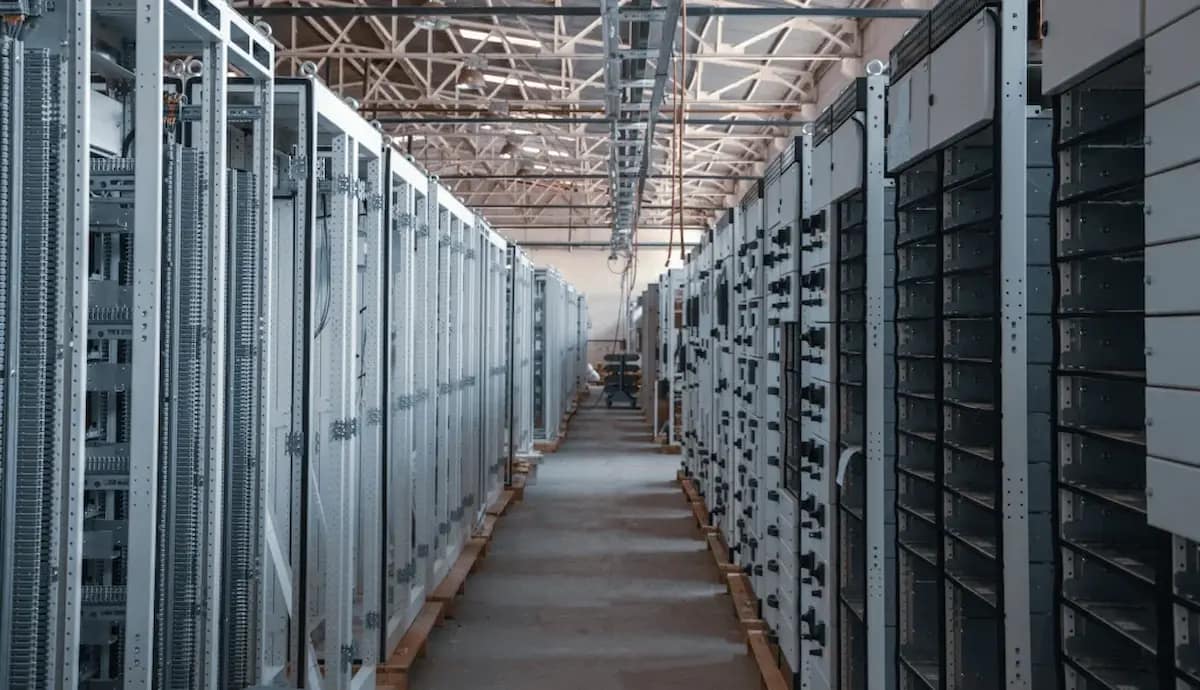
Banks and telecom networks run on limited local data center capacity, with much of the compute sitting outside the continent.
Featured Summary:
- Africa data centers lag AI demand across key markets.
- Compute is concentrated in South Africa, Nigeria, Kenya, and Egypt, leaving much of the continent without local capacity.
- Microsoft, AWS, and Google are expanding infrastructure, but coverage remains uneven.
- Power and energy costs cap how fast expansion can scale.
Data center capacity in Africa lags AI demand, with most compute concentrated in South Africa, Nigeria, Kenya, and Egypt.
Large parts of the continent operate without local infrastructure, with data processed outside domestic markets. Microsoft, AWS, and Google are expanding cloud regions, but power supply and capital costs constrain growth.
Africa data centers determine where AI runs.

Why Data Centers Determine AI Scale in Africa
AI systems run across financial platforms, telecom networks, and digital services. Scaling depends on access to compute delivered through data centers.
Where that infrastructure sits determines how systems operate. In markets with limited local capacity, companies rely on external cloud regions to process and store data.
Data centers—not software—limit how far AI scales across African markets.
Where Are Africa Data Centers Located
Africa data centers are concentrated in a small number of markets.
South Africa holds the largest share, followed by Nigeria, Kenya, and Egypt. These markets account for most of the continent’s operational capacity.
Infrastructure sits in major urban and commercial hubs, where connectivity and power access are strongest.
Outside these locations, capacity is limited. Large parts of the continent operate without local compute infrastructure and rely on external regions.

Who Is Building Data Centers in Africa
Global cloud providers and infrastructure firms are building data centers in Africa, but capacity sits in a limited number of regions.
Microsoft operates Azure cloud regions in South Africa. Amazon Web Services runs infrastructure in Cape Town. Google continues to expand regional cloud and network systems.
Local operators anchor much of the footprint. Teraco Data Environments runs hyperscale campuses in Johannesburg. Africa Data Centres operates facilities across multiple cities. Rack Centre anchors Nigeria’s capacity.
Buildout is concentrated in a few urban hubs. Most markets do not have direct access to local cloud regions.
Why Power Limits Data Center Growth in Africa
Power supply limits how Africa data centers operate across key markets.
Electricity is uneven, with outages affecting reliability even where grid coverage exists. Data centers require continuous, high-density power.
Operators rely on backup generation to maintain uptime, raising costs across cloud infrastructure.
In unstable markets, data center capacity does not scale locally. It remains concentrated in a few hubs.

Africa Data Centers and AI Growth: Can Capacity Keep Up
Data center capacity will determine how much of Africa’s AI development is built and retained within the continent. As infrastructure expands, access to local compute reduces reliance on external cloud regions and lowers the cost of running AI systems.
Where compute infrastructure is available, companies and developers can process, store, and deploy data locally rather than routing workloads through foreign regions.
As demand rises, the distribution of data center capacity—not software capability—will define how far AI growth can scale across African markets.


Recent Comments