

Featured Summary:
- AI infrastructure is attracting more capital as NVIDIA expands financing behind the buildout
- Compute, data centers and electricity are taking a larger share of AI spending
- Private credit is starting to finance projects alongside Big Tech balance sheets
- War is disrupting energy markets, but AI infrastructure spending continues
OpenAI has agreed to use about 8 GW of capacity at the PORTS-Pike campus in Ohio under a 20-year lease with SB Energy. NVIDIA will provide credit support for the first 4.25 GW and invest $1.5 billion in SB Energy.
NVIDIA is also working with Apollo, BlackRock, Blackstone, Brookfield, Goldman Sachs and KKR on financing platforms intended to mobilize more than $500 billion for AI infrastructure.
Goldman Sachs estimates annual AI infrastructure capex could reach about $765 billion in 2026 and $1.6 trillion by 2031.
The AI infrastructure boom is bringing banks, asset managers and private lenders into projects once funded mainly by technology companies.
NVIDIA Is Financing the Compute Behind the AI Boom
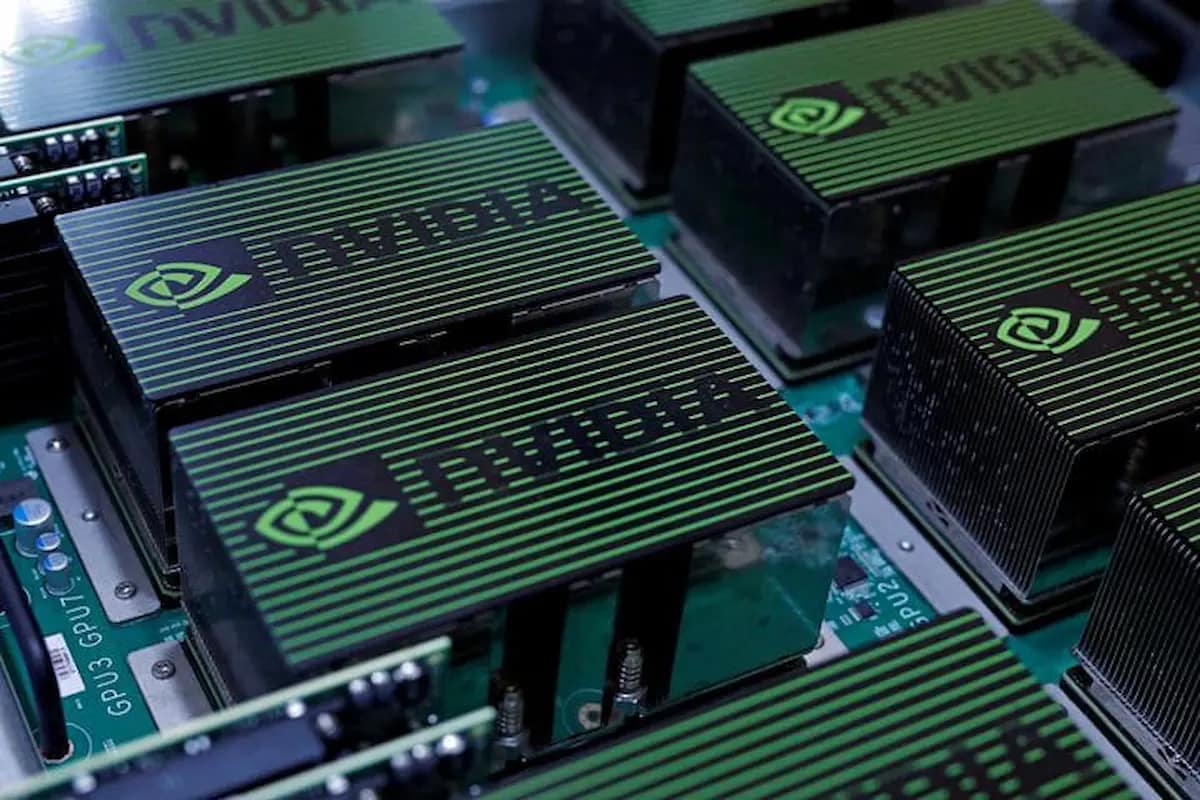
NVIDIA’s financing platforms are targeting AI factories built around its compute systems.
PORTS-Pike is expected to use the company’s DSX architecture, including GPUs, CPUs and networking equipment. CUDA remains part of the software stack running those workloads.
Goldman Sachs estimates AI accelerators account for the largest share of current AI infrastructure spending. Its baseline model puts cumulative AI capex at about $7.6 trillion between 2026 and 2031.
AI chips are replaced on shorter cycles than data-center buildings and power equipment. That makes hardware turnover part of the financing risk around AI projects.
Data Centers and Power Are Becoming Harder to Build Fast Enough
The IEA estimates data-center electricity consumption grew about 12% a year over the five years to 2024. Electricity use from accelerated servers is projected to rise about 30% annually in its base case.
The U.S. and China account for nearly 80% of expected data-center electricity-demand growth through 2030. Singapore and Malaysia are also adding capacity in Southeast Asia.
Data-center projects can be completed within a few years, but new generation and transmission often take longer to deliver.
PORTS-Pike in Ohio will require additional power supply and grid work for the planned campus.
Large AI projects are now being planned around available power and grid connections.
Private Credit Is Entering the AI Infrastructure Boom
Apollo estimates the AI ecosystem could support more than $2 trillion of additional investment-grade debt through 2030.
It expects public markets to absorb less than $1 trillion. Private investment-grade credit could provide more than $1 trillion.
Apollo also estimates that $300 billion to $400 billion of annual hyperscaler capex could be funded through debt markets. Data-center loans, equipment finance and asset-backed debt are already part of that market.
Large technology companies are using long leases, contracts and guarantees to support project borrowing.
Apollo identified at least $90 billion of contractual backstops tied to tens of billions of debt by July 2026.
The OpenAI-NVIDIA project in Ohio also relies on long-term contractual support around the asset. Private credit is taking a larger role in financing AI infrastructure.
AI Infrastructure Is Taking a Bigger Share of Global Capital
The IEA says five large technology companies spent more than $400 billion on capital projects in 2025 and expects that figure to rise 75% in 2026. Their spending is now larger than global investment in oil and gas production.
Power and grid spending is rising with the buildout. Private credit is entering a market still heavily funded by technology companies.
The AI infrastructure boom is already drawing more money into compute, power and financing as companies prepare for higher demand through the rest of the decade.


Recent Comments