

Featured Summary:
- Foreign direct investment discussions involving Somalia are expanding beyond humanitarian priorities into infrastructure, agriculture, logistics, and energy.
- Italian businesses are exploring long-term opportunities linked to Somalia’s economic reconstruction and private-sector growth.
- Somalia trade agreements and business forums are creating new pathways for commercial cooperation and investment.
- Energy trade and African agriculture could determine whether investor interest develops into sustained economic transformation.
Somalia is attracting a different kind of attention.
Recent commercial engagement involving Italian businesses is shifting the conversation beyond aid and security toward infrastructure, agriculture, logistics, and energy.
The significance lies less in any single initiative than in what it reveals: investors are beginning to evaluate Somalia through opportunity as well as risk.
The question is no longer whether challenges exist.
It is whether strategic sectors with long-term potential are becoming compelling enough to change how capital views the country.
Are Italian Investors Targeting Somalia Infrastructure Boom?
Italian interest in Somalia infrastructure reflects a calculation that long-term economic value can outweigh present-day constraints.
Infrastructure projects require patient capital and confidence in future economic activity.
Roads, ports, logistics corridors, and public utilities are rarely built for immediate returns.
They are developed because investors believe commerce, trade, and industrial activity will expand over time.
The growing focus on Somalia infrastructure therefore signals more than interest in construction.
It reflects confidence in the country’s longer-term economic trajectory.
For Italian firms, infrastructure also creates opportunities across multiple sectors.
Better transport networks reduce trade costs, strengthen supply chains, improve access to markets, and encourage broader private investment.
The value lies not only in the assets themselves but in the economic activity they enable.
How Will African Agriculture Benefit Somalia Investment Deals?
African agriculture is emerging as one of the sectors through which Somalia investment deals could generate lasting economic value.
Agriculture remains central to Somalia’s economy, yet long-term growth depends on investment in irrigation, storage, processing, logistics, and market access rather than production alone.
Without those supporting systems, higher output does not necessarily translate into stronger incomes or greater export competitiveness.
Commercial partnerships can help close those gaps.
Investment in processing facilities, transport infrastructure, and agribusiness technology can reduce post-harvest losses and strengthen regional supply chains.
The implications extend beyond Somalia because stronger agricultural networks contribute to wider food security and trade across the Horn of Africa.
Is Foreign Direct Investment Rising in Somalia?
Foreign direct investment discussions are expanding beyond humanitarian priorities into productive sectors such as infrastructure, logistics, agriculture, and energy.
Recent engagement between Somali institutions and international businesses suggests that parts of the investment community are assessing the country through a longer-term commercial lens.
Investors rarely wait for perfect conditions.
They look for evidence that reforms, demand, and strategic opportunities can justify measured risk.
The sectors attracting attention reinforce that view.
Infrastructure, agriculture, energy, and logistics require sustained commitment rather than speculative capital.
Their prominence indicates that investors are increasingly evaluating Somalia’s productive capacity and future market potential instead of focusing exclusively on historical challenges.
Will Somalia Trade Agreements Boost Italian Partnerships?
Trade agreements and structured business engagement reduce uncertainty by creating clearer pathways for investment, market access, and commercial cooperation.
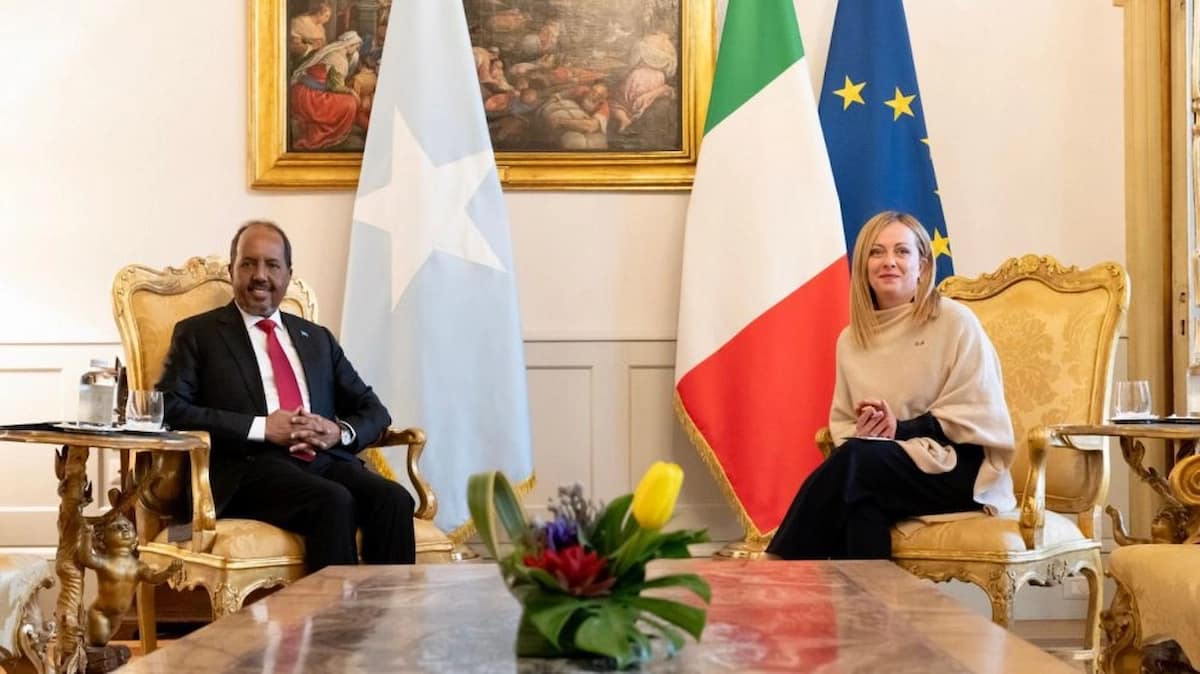
That is the significance of the growing engagement between Somalia and European partners.
The EU–Somalia Business Forum has identified infrastructure, agriculture, fisheries, renewable energy, logistics, and manufacturing as priority sectors for investment and partnership, creating a platform through which Italian and other European businesses can engage Somali counterparts.
The initiative reflects a broader shift from diplomatic dialogue toward commercial execution, reinforcing conditions that could help Somalia investment deals evolve into sustained business activity.
Can Energy Trade Reshape Somalia’s Economic Recovery?
Economic recovery requires power before it requires production.
Reliable energy underpins manufacturing, agro-processing, logistics, digital services, and industrial expansion.
Without stable energy systems, investment in other sectors often struggles to achieve scale.
This is why Energy trade and energy infrastructure are emerging as strategic priorities within Somalia’s broader development agenda.
Improvements in Energy trade can support industrial activity, reduce operating costs, and strengthen investor confidence across the wider economy.
When combined with advances in Somalia infrastructure and African agriculture, they create conditions that make long-term private investment more commercially viable.
Somalia’s greatest opportunity may no longer lie solely in untapped resources.
It may lie in changing investor perception.
Infrastructure, agriculture, and energy are attracting attention from businesses willing to evaluate future potential rather than present constraints.
Whether that interest develops into sustained Foreign direct investment will depend on execution, but the direction of travel is becoming increasingly difficult to ignore.


Recent Comments