

Featured Summary:
- Pesticide residues, contamination and failed safety checks have disrupted African agricultural shipments entering international markets
- Exporters face additional costs from laboratory testing, certification requirements and inconsistent inspection procedures
- WTO-backed projects in Nigeria, Ghana and The Gambia are addressing documented weaknesses in agricultural export compliance
- Ireland’s €200,000 contribution supports further international assistance, although its impact on African export performance remains unmeasured
European Union authorities issued 10 border rejection notifications for Nigerian sesame shipments between January and April 2023. Food safety violations, including contamination and pesticide-residue concerns, have complicated the country’s agricultural exports.
The International Trade Centre has identified weaknesses in pesticide management, hygiene and certification among the problems affecting Nigerian sesame and cowpea suppliers.
The World Trade Organization (WTO) examined 78 sanitary and phytosanitary trade concerns at its November 4–6, 2026 committee meeting.
Five were new, while 73 had been raised previously. The discussions covered food safety and animal and plant health requirements affecting international trade, including markets beyond Africa.
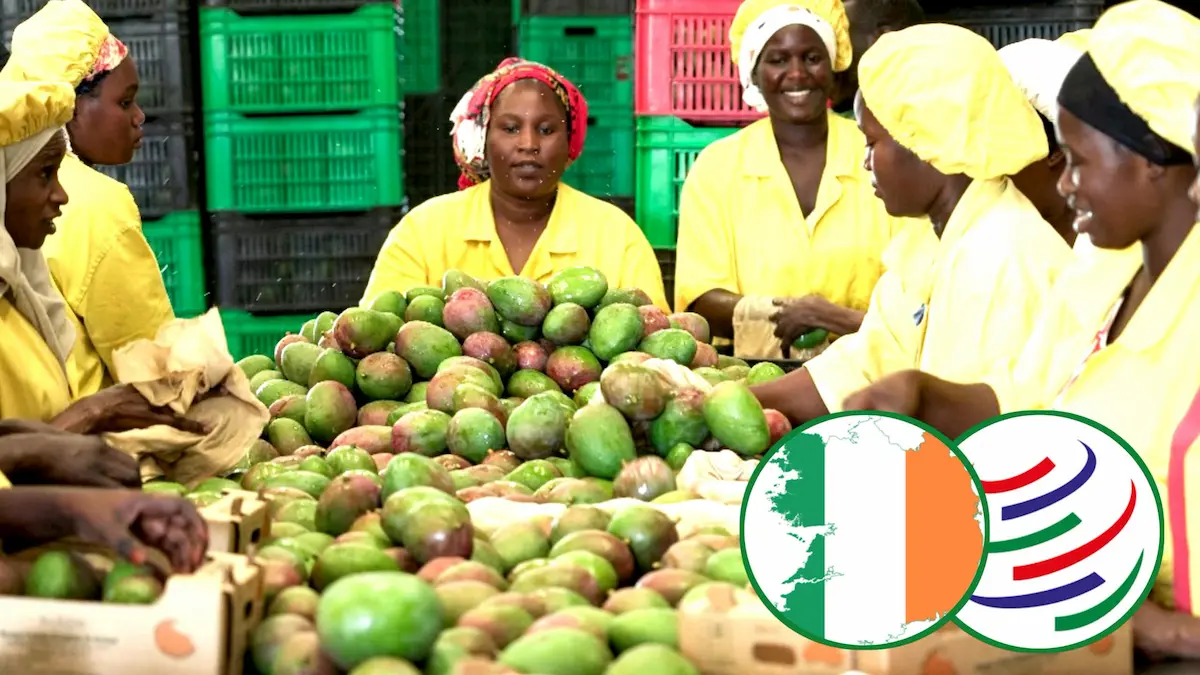
Ireland subsequently announced a €200,000 contribution to the WTO’s Standards and Trade Development Facility (STDF), which finances technical assistance to help developing countries meet international agricultural safety requirements. The contribution supports the facility’s 2025–2030 strategy, with no dedicated African allocation disclosed.
Nigeria is implementing an STDF-backed programme addressing pesticide management, food safety and traceability in sesame and cowpea production.
Ghana has received support for aflatoxin control in maize and groundnuts, while a project in The Gambia targets cashew export certification and inspection systems.
The available project records have yet to establish whether these interventions have reduced shipment rejections or improved access to overseas buyers.
Food Safety Failures Disrupt African Agricultural Export Markets
Nigeria’s dried bean exports have faced an EU import ban over excessive pesticide residues, while sesame shipments have been rejected in Japan and Türkiye following Salmonella contamination.
Documentation prepared for the Standards and Trade Development Facility (STDF) also identified weaknesses in pest management, post-harvest hygiene and export certification.
Some pesticides used by Nigerian producers are prohibited in destination markets, leaving shipments exposed to rejection even when the products are legally grown and traded domestically.
Aflatoxin contamination has restricted Ghana’s ability to export groundnuts and processed agricultural products. An STDF assessment identified maize and groundnuts among the country’s most affected crops, with contamination occurring during production and storage.
The problem is particularly significant for exporters supplying markets with strict limits on aflatoxin concentrations, including the European Union.
Pesticide violations have also affected horticultural exports from Ethiopia, Ghana, Kenya, Tanzania, Uganda and Zambia. An STDF project assessment recorded more than 280 pesticide-residue notifications involving these countries in the EU’s Rapid Alert System for Food and Feed between 2020 and 2025.
Approximately 75% resulted in border rejections. The reported violations included residues exceeding permitted limits and substances not authorised in importing markets.
The assessment identified increased border inspections affecting agricultural exports to the European Union, United Kingdom, United States, Canada and Australia.
Some products face additional official controls, requiring exporters to undergo more frequent checks before their shipments can enter destination markets.
Delays are particularly consequential for horticultural suppliers handling perishable goods, where extended clearance can reduce the time available for distribution and sale.
Testing and Certification Costs Burden African Agricultural Exporters
The Standards Organisation of Nigeria charges ₦50,000 per pesticide residue tested in food samples, according to its published laboratory tariff schedule.
Rapid mycotoxin screening costs ₦30,000 per toxin, while confirmatory analysis costs ₦50,000. The charges vary with the contaminants being examined and do not represent a uniform certification fee for agricultural exports.
Tanzania’s horticultural exports increased from $290.1 million in 2022 to $417.7 million in 2023, according to the Standards and Trade Development Facility (STDF).
Food safety testing and traceability remain concerns for the industry. In March 2026, Fera Science began a $50,000 feasibility study examining whether GreenCert could expand its laboratory testing capacity. The assessment is intended to establish the commercial case for additional services before a larger investment proposal is developed.
Zambia’s seed exporters face difficulties securing recognition of laboratory results across borders. The STDF has also identified inconsistent quarantine pest lists and inadequate storage during transit as constraints on the country’s seed trade.
A $35,300 project preparation grant launched in January 2026 is examining improvements to laboratory accreditation, phytosanitary inspections and certification for groundnut, bean and maize seeds. The work remains at the proposal-development stage.
For smaller traders, compliance expenses extend beyond laboratory services. CAB International is conducting a $99,977 assessment in Malawi, Tanzania and Zambia to identify the sanitary and phytosanitary requirements affecting cross-border agricultural trade.
The research includes a cost-benefit analysis of formalising trade, particularly for women and younger traders who face difficulties obtaining regulatory information and meeting compliance expenses. Its findings have not yet been published in the STDF project record.
The proposed interventions have different financing requirements. Tanzania’s feasibility study must establish whether expanded laboratory services can attract sufficient demand, while Zambia’s initiative is preparing a wider programme covering testing and regulatory procedures. Neither project has reported a completed infrastructure investment or demonstrated reductions in exporters’ compliance costs.
WTO-Backed Projects Target Africa’s Agricultural Export Compliance Gaps
The International Trade Centre is implementing a $1.21 million programme to improve pesticide management and food safety in Nigeria’s sesame and cowpea supply chains.
The Standards and Trade Development Facility (STDF) is contributing $997,864 to the project, which began in March 2024. Working with the Nigerian Export Promotion Council, the programme aims to train 30 advisers who will assist 300 farmers and processors with agricultural hygiene, pesticide use and post-harvest handling.
Ghana’s $1.22 million aflatoxin-control programme includes $969,607 from the STDF. The Council for Scientific and Industrial Research’s Science and Technology Policy Research Institute is managing implementation across four regions and five markets in Greater Accra.
Planned activities include laboratory equipment, moisture meters, improved grain storage and digital traceability for maize and groundnut suppliers. The published project record does not identify which equipment purchases or infrastructure improvements have been completed.
The United Nations Industrial Development Organization began implementing The Gambia’s $878,000 cashew programme in June 2026, with $798,000 financed by the STDF.
The project involves the Food Safety and Quality Authority and covers revisions to food safety legislation, risk-based inspections, laboratory accreditation and certification for cashew producers and processors.
Initial implementation arrangements have been established, but completed laboratory accreditation has not been confirmed in the available project documentation.
In July 2026, the Intergovernmental Authority on Development and the African Continental Free Trade Area Secretariat organised technical training in Nairobi on sanitary and phytosanitary requirements.
Participants examined laboratory procedures, quality assurance and regulatory harmonisation. The programme did not establish mutual recognition of laboratory results, leaving participating authorities to determine whether testing and certification procedures can be accepted across their respective markets.
WTO Support Faces Africa’s Agricultural Export Investment Gap
The Standards and Trade Development Facility (STDF) received a record 380 applications for assistance from developing and least-developed countries in 2025.
Its 2025–2030 strategy calls for greater investment from governments, development institutions and private businesses to expand food safety and agricultural health programmes beyond individual projects. The volume of applications indicates substantial demand for assistance, although it does not establish the total financing required.
STDF-supported work in Mali has demonstrated commercial benefits from improved compliance. Smoked-fish producers secured price premiums that more than doubled over five years, while exports expanded to five West African countries.
The facility has also reported improvements in agricultural market access in Uganda. These results establish precedents for successful interventions, without determining whether comparable outcomes will follow in other African export industries.
Electronic certification is another area of expansion. By the end of 2025, 96 countries were exchanging electronic phytosanitary certificates through the International Plant Protection Convention’s ePhyto system, which received early support from the STDF.
Wider participation would allow more exporters to submit recognised plant health documentation electronically, subject to the requirements of importing authorities.
The financing requirements extend to accredited laboratories, inspection services and traceability systems capable of serving exporters beyond existing project beneficiaries.
Governments and commercial operators considering these investments will need evidence of demand for testing services, the costs of maintaining accredited facilities and acceptance of their results in destination markets.
Ireland’s €200,000 contribution adds to the WTO-backed programme, but no dedicated African allocation has been announced. The next developments for exporters and investors are the completion of funded compliance facilities, wider recognition of certification systems and documented reductions in border rejections. Those outcomes will determine whether additional assistance improves access to international agricultural markets.


Recent Comments