

Featured Summary:
- African uranium is attracting renewed global attention as nuclear energy regains prominence in long-term energy planning.
- Namibia leads uranium production in Africa, while Niger and South Africa remain strategically significant producers.
- The uranium industry is becoming more competitive as major powers seek secure and diversified supply chains.
- The uranium market is placing greater emphasis on resource ownership, value retention, and long-term strategic partnerships.
Global competition for strategic minerals is entering a new phase.
As governments expand or reconsider nuclear power programmes, attention is shifting toward the resources that underpin long-term energy security.
Uranium has returned to the centre of that conversation, not simply as a mining commodity but as an asset with growing geopolitical significance.
In that environment, African uranium is assuming greater strategic importance for countries seeking reliable and diversified supply.
The renewed interest extends beyond resource extraction.
It is reshaping diplomatic engagement, investment priorities, and long-term commercial relationships between producer nations and major global powers, placing African uranium at the centre of evolving discussions about energy security and industrial competitiveness.
How is African Uranium Shaping Global Geopolitics?
African uranium has become a strategic resource because the expansion of nuclear energy depends on stable and predictable fuel supplies.
Countries operating nuclear reactors require long-term access to uranium, making supply security an increasingly important element of national energy policy.
As geopolitical uncertainty influences commodity markets, governments are paying closer attention to jurisdictions capable of supporting resilient nuclear fuel chains.
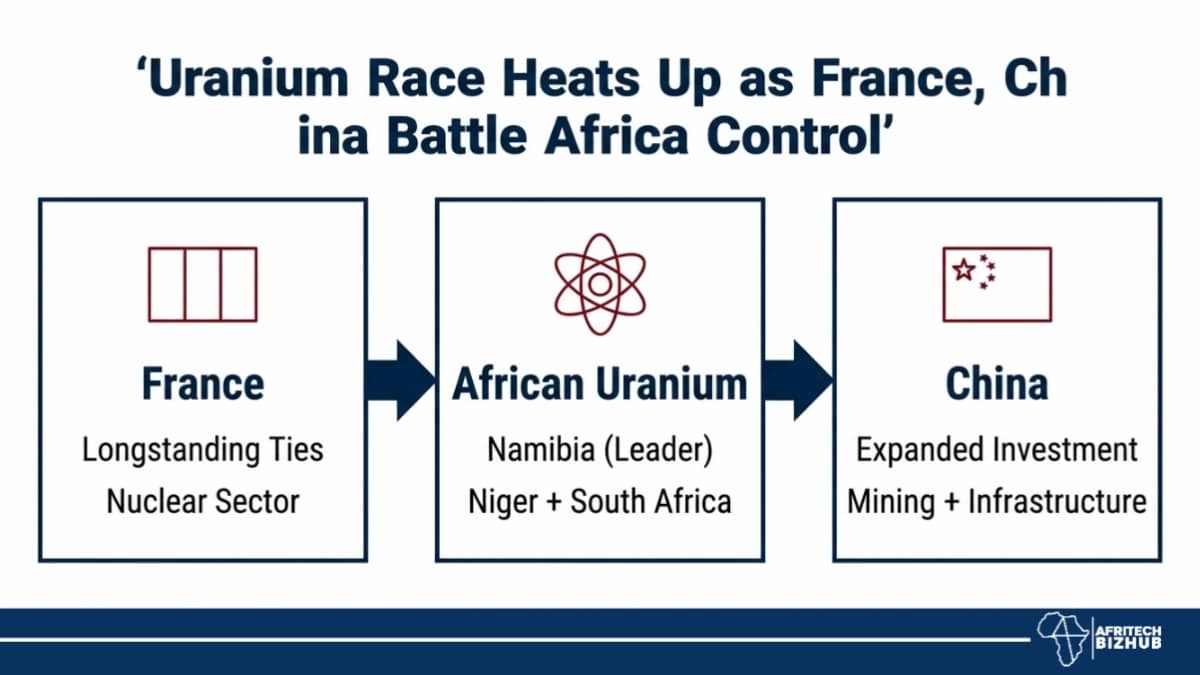
France maintains longstanding relationships across parts of Africa linked to its nuclear sector, while China has expanded investment in mining and infrastructure throughout the continent.
Those developments are elevating the geopolitical profile of African uranium beyond its traditional role in mineral exports.
Which Countries Dominate Uranium Production in Africa?
Namibia remains Africa’s leading uranium producer, supported by established mining operations and integration into international nuclear fuel markets.
Its production capacity gives it immediate relevance within the global uranium market, while Niger continues to occupy an important position because of its historical contribution to uranium supply and substantial resource base.
South Africa also retains strategic significance through uranium resources associated with its broader mining industry.
Together, these countries shape much of the current African uranium landscape and influence how international buyers assess long-term supply security across the continent.
Why Is the Uranium Industry Becoming Highly Contested?
The uranium industry is facing greater competition because nuclear power is returning to policy discussions focused on energy security, emissions reduction, and reliable electricity generation.
At the same time, governments are seeking to diversify critical mineral supply chains and reduce exposure to concentrated sources of production.
That combination has intensified interest in jurisdictions capable of supporting long-term uranium availability.
African uranium occupies an increasingly important position within that environment. Competition now extends beyond extraction volumes to financing arrangements, commercial partnerships, resource governance, and access to future production capacity.
What Makes Uranium Reserves in Africa Strategic?
Uranium reserves represent long-term strategic assets in a world where demand for secure energy resources is attracting renewed policy attention.
The International Atomic Energy Agency has identified growing interest in nuclear power development across parts of Africa while emphasising the importance of robust institutions, regulatory frameworks, and long-term planning for the sector.
That perspective reinforces the strategic relevance of uranium reserves beyond their immediate commercial value.
The significance of African uranium therefore extends beyond geology.
Resource endowments increasingly influence investment decisions, diplomatic engagement, and broader discussions about industrial development and energy security.
How Is the Uranium Market Shifting African Power?
The uranium market is changing the negotiating position of producer countries as reliable supply becomes more valuable to governments and industries planning decades into the future.
Resource-rich economies are attracting heightened attention from investors and strategic partners seeking stability in critical mineral supply chains.
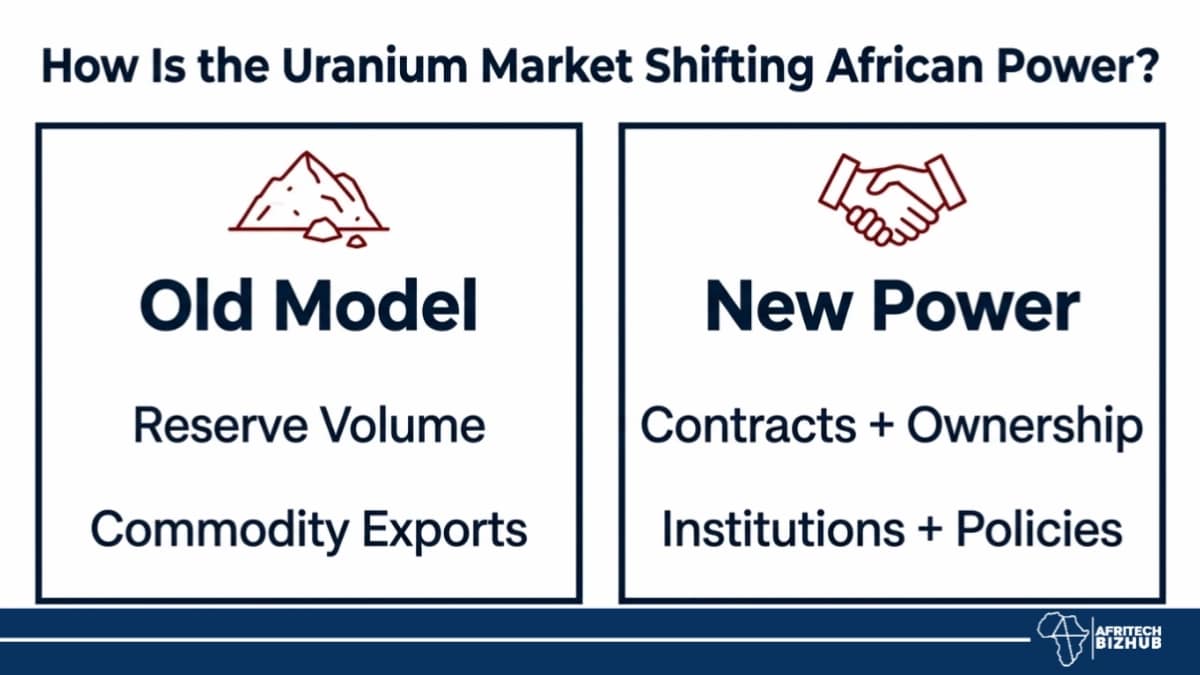
The resulting commercial relationships place greater emphasis on contract structures, ownership arrangements, and the distribution of long-term economic value.
The broader implication reaches beyond commodity exports.
As demand for African uranium grows alongside renewed interest in nuclear energy, the continent’s influence within the global uranium market is increasingly tied not only to the volume of its reserves but also to the institutions, policies, and commercial frameworks through which those reserves are developed.


Recent Comments