

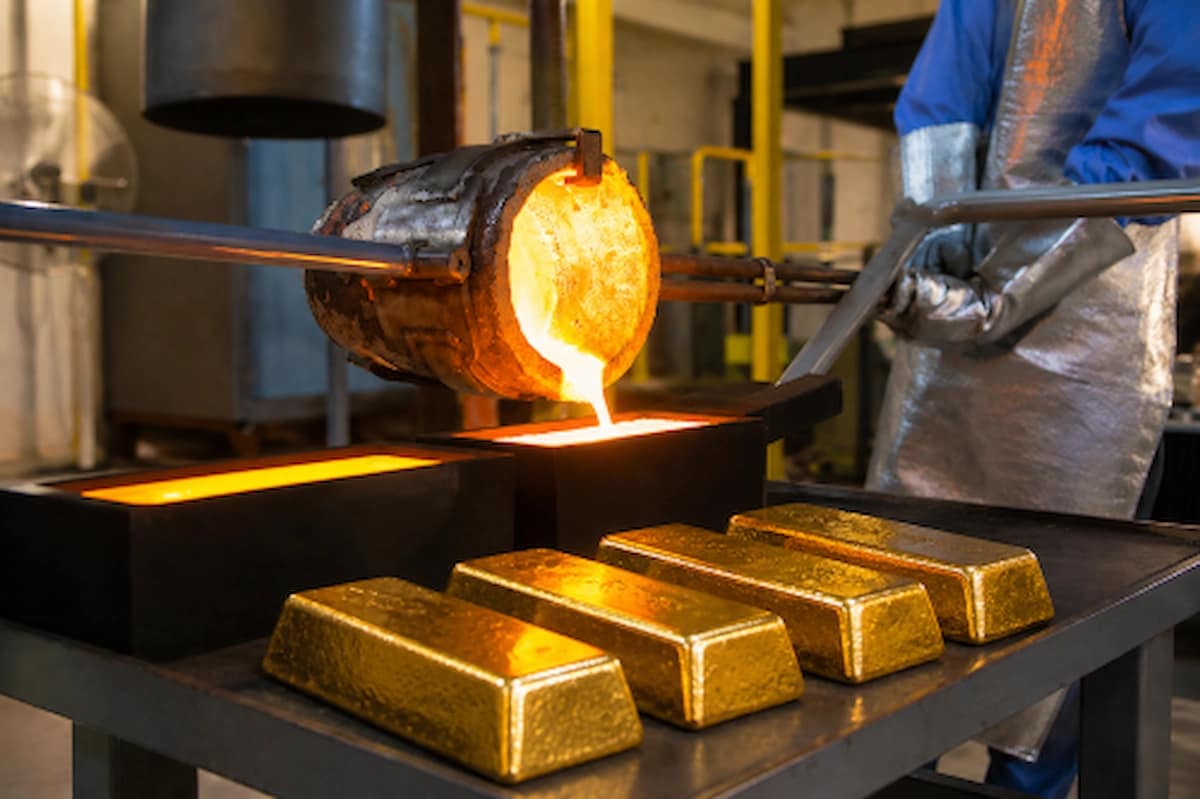
Featured Summary:
- Gold processing is now central to Guinea’s mining policy as the country pushes more value to remain inside its economy.
- The export ban is designed to stop raw gold from leaving the country before it passes through local refining channels.
- Mineral export restrictions could increase domestic revenue and transparency, but poor execution may create delays for miners and traders.
- Guinea’s gold export rules will only work if miners receive fair pricing, quick payments, accessible refining services, and clear compliance procedures.
Guinea is trying to change the way mineral wealth moves through its economy.
For many years, African countries have exported raw minerals while refining, pricing, branding, and higher-value trading happened elsewhere.
That model gave governments export earnings, but it often left local economies with too little processing capacity, too few skilled jobs, and limited control over the final value of their resources.
The raw gold ban is Guinea’s attempt to interrupt that pattern.
By requiring locally mined gold to be processed before export, the government is trying to keep more economic activity inside the country.
The policy speaks to a bigger question facing resource-rich African economies: should minerals leave the continent as raw supply, or should countries build stronger systems that capture more value before export?
Guinea’s decision is bold, but its success will depend on whether the country can build a gold processing system that miners, exporters, buyers, and international markets can trust.
How Will Guinea Enforce Gold Processing Rules?
Guinea will enforce gold processing rules by making local refining a condition for legal gold export.
This means miners, licensed buyers, traders, and exporters will need to move gold through approved domestic refining channels before it can enter international markets.
The government is not only changing where gold is processed; it is also trying to move control closer to the point where value is measured, certified, taxed, and recorded.
The difficult part will be implementation.
Gold often moves through both formal and informal networks, especially where small-scale mining is active and cash-based trade is common.
If Guinea wants the rules to succeed, it will need more than a ban at the border.
It will need accessible refining services, clear licensing, fast documentation, digital tracking, fair pricing, strong customs control, and practical support for miners who may not be used to formal systems.
Without those pieces, the policy could create bottlenecks and push some gold into illegal routes rather than bringing more trade into the official economy.
Why Did Guinea Impose Export Ban Policy?
Guinea imposed the export ban policy because it wants to capture more value from gold before the mineral leaves the country.
Raw gold exports allow a country to earn from production, but they limit the benefits that come from refining, certification, testing, logistics, finance, and formal trading infrastructure.
By requiring local processing, Guinea is trying to turn gold from a quick export product into a fuller economic activity that supports jobs, revenue, and industrial capacity.
The policy also reflects a wider African shift in thinking about mineral control.
Governments are becoming less willing to accept arrangements where resources are extracted locally while most of the value is created abroad.
Guinea has already become important in global bauxite supply, and its leaders are now applying a similar value-addition argument to gold.
The message is simple: mineral wealth should not only be measured by what is taken from the ground, but by how much of the value chain the country can keep, regulate, and develop.
What Impact Will Mineral Export Restrictions Bring?
Mineral export restrictions could bring Guinea more revenue, better oversight, and stronger local processing if the policy is managed carefully.
A well-run system can make gold flows easier to track, improve tax collection, reduce underreporting, and help the government understand how much gold is being produced and sold.
It can also create demand for local refining, certification, storage, transport, insurance, and financial services that support the wider gold economy.
The risk is that restrictions can harm miners and exporters if the system is not ready.
If refining capacity is limited, payments are slow, prices are unclear, or paperwork becomes too difficult, miners may lose income and traders may avoid formal channels.
Small-scale miners are especially vulnerable because they often depend on quick buyers and immediate cash.
Guinea’s challenge is therefore to make the legal route more attractive than the informal one.
A strong export ban should not only stop raw gold from leaving; it should build a formal market that people are willing to use.
Are Guinea’s Gold Reserves Sufficient for Processing?
Guinea’s gold reserves and production base give the country a reasonable foundation for local processing, but gold reserves alone cannot guarantee success.
A refinery needs consistent supply, transparent sourcing, market trust, quality standards, trained workers, and buyers who accept its certification.
If legal gold flows are too fragmented or if miners avoid the formal system, even a country with meaningful reserves can struggle to keep a processing model commercially strong.
The Extractive Industries Transparency Initiative notes that Guinea’s economy relies heavily on the extractive sector and that the country produces gold, diamonds, and bauxite, mostly for export.
This matters because the raw gold ban is not happening in a small or isolated sector; it is part of a wider extractive economy where production and exports play a major role in national revenue and trade.
For Guinea, the question is not only whether gold exists.
The real question is whether enough gold can be brought into a formal, trusted, and competitive refining system that supports the government’s value-addition agenda.
How will Gold Export Rules Affect Miners?
Gold export rules will affect miners by changing how they sell gold, who they sell to, how quickly they are paid, and what documents they need before their product reaches the international market.
Large mining companies may adjust more easily because they already operate with compliance teams, records, export procedures, and formal buyers.
Smaller miners may face a harder transition because many depend on informal buying networks, quick payments, and flexible trading routes.
The policy can still benefit miners if the government builds a system that protects them rather than simply policing them.
Miners need fair prices, simple registration, nearby buying points, reliable refining access, quick settlement, and protection from middlemen who may use the new rules to force lower prices at the mine site.
If those conditions are in place, the gold export rules could bring more miners into the formal economy and increase national value from gold.
If they are not, the rules could reduce miner income, slow trade, and encourage smuggling.
Guinea’s real test is not whether it can announce a ban, but whether it can build a gold system strong enough for miners to trust.
How Will Gold Export Rules Affect Miners?
Gold export rules will affect miners by changing how they sell gold, who they sell to, how quickly they are paid, and what documents they need before their product reaches the international market.
Large mining companies may adjust more easily because they already operate with compliance teams, records, export procedures, and formal buyers.
Smaller miners may face a harder transition because many depend on informal buying networks, quick payments, and flexible trading routes.
The policy can still benefit miners if the government builds a system that protects them rather than simply policing them.
Miners need fair prices, simple registration, nearby buying points, reliable refining access, quick settlement, and protection from middlemen who may use the new rules to force lower prices at the mine site.
If those conditions are in place, the gold export rules could bring more miners into the formal economy and increase national value from gold.
If they are not, the rules could reduce miner income, slow trade, and encourage smuggling.
Guinea’s real test is not whether it can announce a ban, but whether it can build a gold system strong enough for miners to trust.


Recent Comments