

Feature Summary:
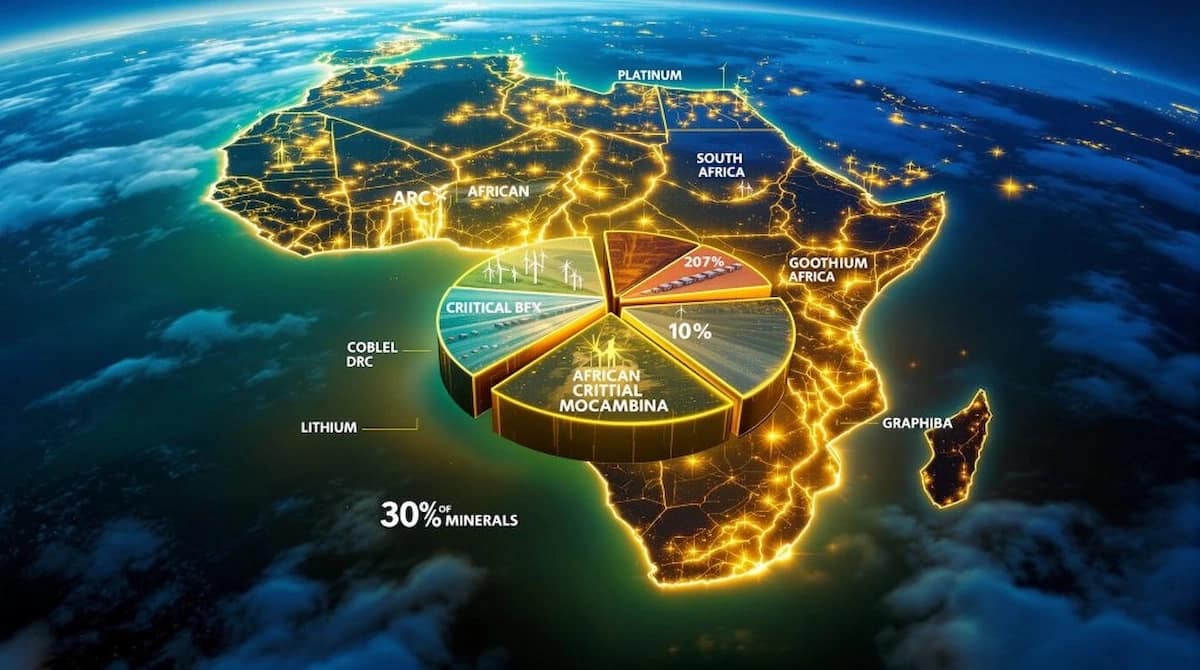
- Critical minerals have become central to G7 engagement with Africa because they underpin clean energy technologies and advanced manufacturing.
- Africa mining is drawing renewed strategic interest as governments seek more resilient Supply chains and diversified sourcing.
- Mineral processing is emerging as the next battleground as African countries push to retain more value from their resources.
- Kenya minerals and other strategic deposits highlight the continent’s growing influence over future industrial supply networks.
The race for Africa’s resources is no longer simply about extracting minerals from the ground.
It is increasingly about deciding where those minerals are processed, who controls the industries built around them, and which economies capture the greatest share of the value they create.
That shift explains why Critical minerals have moved to the centre of discussions between African governments and G7 economies.
Batteries, electric vehicles, renewable energy systems, semiconductors, and advanced manufacturing all depend on reliable access to strategic resources.
The deeper competition is therefore no longer for ownership alone but for influence over the supply chains that determine future industrial power.
How Is Africa Mining Reshaping Global Value Chains?
Africa mining is reshaping global value chains because the continent holds many of the resources needed to support the technologies driving the energy transition and digital economy.
Governments and manufacturers are reassessing sourcing strategies in response to growing demand for resilient industrial networks.
That reassessment is elevating Africa’s strategic importance as companies seek long-term partnerships capable of supporting future production requirements.
The transformation extends beyond extraction.
Global value chains are increasingly being organised around access to processing, logistics, refining, and manufacturing capacity, placing African producers in a stronger strategic position than in previous commodity cycles.
Will Critical Minerals Drive G7 Africa Investments?
Critical minerals are becoming an important catalyst for investment discussions between G7 economies and African partners because industrial competitiveness now depends heavily on secure resource access.
Recent initiatives increasingly combine mining with infrastructure, energy systems, transport corridors, financing, technology cooperation, and skills development rather than focusing solely on extraction.
This reflects recognition that resilient supply chains require comprehensive ecosystems capable of supporting long-term industrial growth.
The strategic objective reaches beyond individual projects.
G7 engagement is increasingly linked to building dependable partnerships that strengthen economic resilience while reducing exposure to concentrated processing hubs elsewhere in the world.
Can Mineral Processing Boost West Africa Economies?
Mineral processing has become one of the most significant opportunities available to resource-rich African economies because it creates economic value that extends far beyond extraction.
Processing activities generate skilled employment, stimulate supporting industries, encourage technology transfer, and strengthen domestic manufacturing capabilities.
They also allow countries to retain a larger share of the economic benefits associated with their natural resources before products enter international markets.
The next phase of Africa’s mining story is therefore likely to be determined less by export volumes than by the extent to which processing capacity develops alongside production.
Are Supply Chains Shifting Away From China Dominance?
Global supply chains are being reconfigured as governments seek to reduce strategic vulnerabilities and diversify access to Critical minerals essential for clean energy, advanced manufacturing, and digital technologies.
The objective is not to eliminate existing trading relationships but to build greater resilience by expanding sourcing options and strengthening partnerships with resource-rich economies, including those in Africa.
The G7’s Partnership for Global Infrastructure and Investment (PGII) reflects that broader strategy by supporting infrastructure, industrial development, and sustainable investment across partner countries.
For African producers, the significance extends beyond attracting capital.
The larger opportunity is to use rising international interest to expand Mineral processing, improve logistics, and strengthen domestic industries that capture more value before resources enter global markets.
The conversation is gradually shifting from who owns the mines to who shapes the supply chains built around them.


Recent Comments