

Featured Summary:
- Chinese investors are being drawn toward South Africa because the country offers minerals, manufacturing capacity, logistics links, and access to Africa’s wider market.
- China Expo discussions showed that global supply chains are shifting toward countries that can provide resilience, resources, production capacity, and regional trade access.
- The Green economy is giving South Africa a stronger role because clean technologies depend on minerals and industrial inputs the country can supply.
- South Africa exports could gain from deeper China access if trade cooperation supports agriculture, mining, manufacturing, logistics, and value-added production.
Global supply chains are being rearranged because companies no longer want to rely on narrow production routes or fragile trade systems that can be disrupted by politics, shipping delays, energy shocks, or rising costs.
This change is creating space for countries that can offer minerals, ports, agricultural exports, manufacturing capacity, and access to growing regional markets.
South Africa is trying to use that opening to argue that Africa should not sit at the edge of global production, waiting only to supply raw materials or consume finished goods.
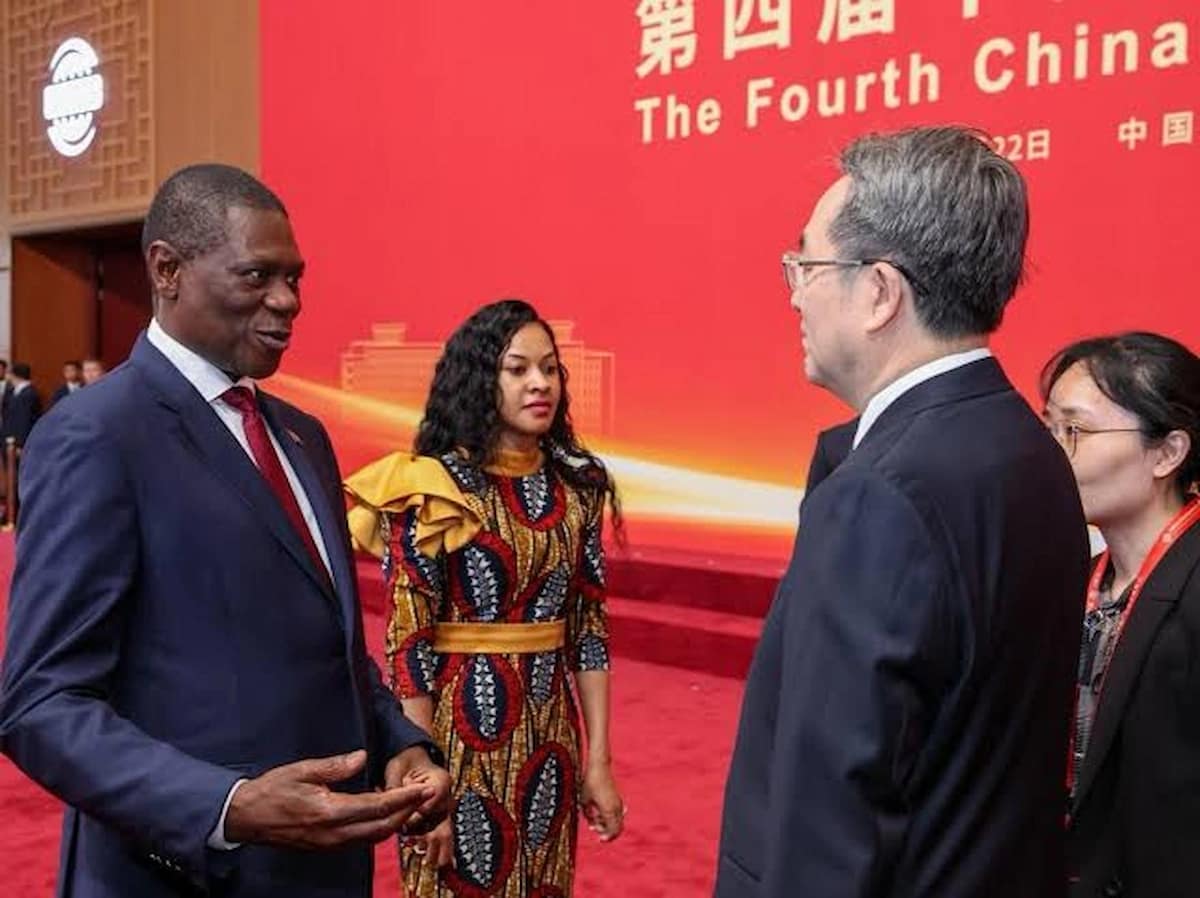
The China International Supply Chain Expo made that ambition visible.
South Africa used the platform to present itself as a serious supply-chain partner for Chinese investors and global firms searching for reliable production links.
The pitch was not simply about attracting more trade from China.
It was about placing the South Africa economy inside the next phase of global supply chains, where green technologies, food security, critical minerals, digital trade, industrial cooperation, and Africa trade access are becoming more valuable.
Are Chinese Investors Driving South Africa Growth?
South Africa is using Chinese investor interest to reposition itself from a commodity supplier into a wider industrial partner, but the growth impact will depend on whether new capital builds factories, export capacity, logistics systems, and green-economy value chains rather than simply increasing trade volumes.
Chinese investors already understand South Africa’s role in mining, agriculture, infrastructure, and manufacturing, which gives the relationship a stronger base than a short-term diplomatic visit.
The China Expo created a platform for South Africa to turn that familiarity into deeper commercial commitments.
The opportunity is important because South Africa needs investment that strengthens the productive side of its economy.
Capital that only extracts raw materials or expands imports will not solve the country’s growth problem.
Investment that supports beneficiation, component manufacturing, renewable energy inputs, agro-processing, logistics, and technology partnerships can create more durable value.
That is why the Chinese investor question should not be answered only by counting investment pledges.
The real test is whether Chinese capital helps the South Africa economy become more competitive in the supply chains that will shape future global trade.
What Did China Expo Reveal About Supply Chains?
The China Expo made one thing clear: companies are no longer searching only for cheap production bases; they are looking for reliable partners that can supply minerals, food, manufactured goods, logistics access, and regional market reach in one place.
South Africa’s presentation matched that shift by offering itself as a country with industrial depth, export experience, ports, agricultural strength, green-economy inputs, and access to the African Continental Free Trade Area.
That combination matters because supply chains now reward countries that can reduce risk while opening new markets.
The expo also exposed how Africa’s role in global production is being renegotiated.
For years, the continent was often treated as a source of raw materials or a destination for finished goods.
South Africa’s message challenged that old position by arguing that African economies can become production partners, sourcing hubs, and value-chain participants.
If this shift is handled well, Africa trade could move beyond volume and become more about where value is created.
That would mark a deeper change than simply exporting more products to China.
How Green Economy Reshapes South Africa Industry?
South Africa’s green-economy opportunity lies in the fact that clean technology cannot scale without the minerals, components, energy systems, and industrial capacity the country is trying to build around.
Electric vehicles, batteries, fuel cells, renewable power systems, and energy storage all require strategic inputs, and South Africa has important mineral and industrial advantages that can support those supply chains.
This gives the country a stronger argument when speaking to investors looking for long-term access to green-economy materials.
The risk is that South Africa could still lose value if it remains focused on exporting raw inputs instead of building industries around them.
A stronger green economy strategy would connect mining with processing, manufacturing, research, skills development, and export-ready industrial zones.
Chinese firms already have major experience in renewable energy manufacturing, while South Africa has minerals, ports, industrial capacity, and access to regional markets.
If both sides build the relationship properly, green-economy cooperation could support factories and jobs inside South Africa rather than only feeding external manufacturing systems.
Is Africa Trade Shift Boosting New Partnerships?
Africa trade is boosting new partnerships because global companies now see the continent as a market that can also serve as a platform for production, distribution, and regional growth.
South Africa is using the African Continental Free Trade Area to make its case stronger, because investors entering the country can potentially reach a much larger African market through regional value chains.
That changes South Africa’s pitch from a single-country opportunity into a gateway argument built around scale, infrastructure, and market access.
The Presidency of South Africa’s official address at the China International Supply Chain Expo presented the country as a reliable supply base for critical inputs, a destination for industrial beneficiation, and a partner for co-production.
The same address identified opportunities in agriculture and food systems, critical minerals and the green economy, advanced manufacturing, logistics, automotive value chains, and digital trade.
This source matters because it shows that South Africa’s China strategy is not only about selling more goods.
It is about using Africa trade integration to attract partnerships that can build supply-chain capacity inside the continent.
Are South Africa Exports Gaining China Advantage?
South Africa exports could gain a China advantage if market access turns into stable buying relationships, stronger logistics, better standards compliance, and investment in value-added production.
China’s large consumer and industrial markets create demand for food, minerals, agricultural products, manufactured goods, and green-economy inputs.
South Africa already has strengths in areas such as citrus, wine, macadamia nuts, minerals, automotive components, and industrial goods, which means deeper China access could support sectors that already have export experience.
The opportunity will depend on whether South Africa avoids becoming only a supplier of raw inputs.
Greater access to China can support the South Africa economy if exports are tied to processing, branding, packaging, manufacturing, and stronger local supply chains.
If the relationship becomes one-sided, with South Africa exporting low-value inputs and importing higher-value finished goods, the benefit will be limited.
The real power shift is therefore not that Africa is replacing China in global supply chains.
It is that Africa is trying to become too important to ignore when the next generation of global supply chains is designed.


Recent Comments